How can you protect your brain against memory loss and cognitive decline?
YOUR NOSE IS THE KEY TO YOUR BRAIN
-
YOUR NOSE IS THE KEY TO YOUR BRAIN -
A simple way to promote brain health, backed by 50+ studies
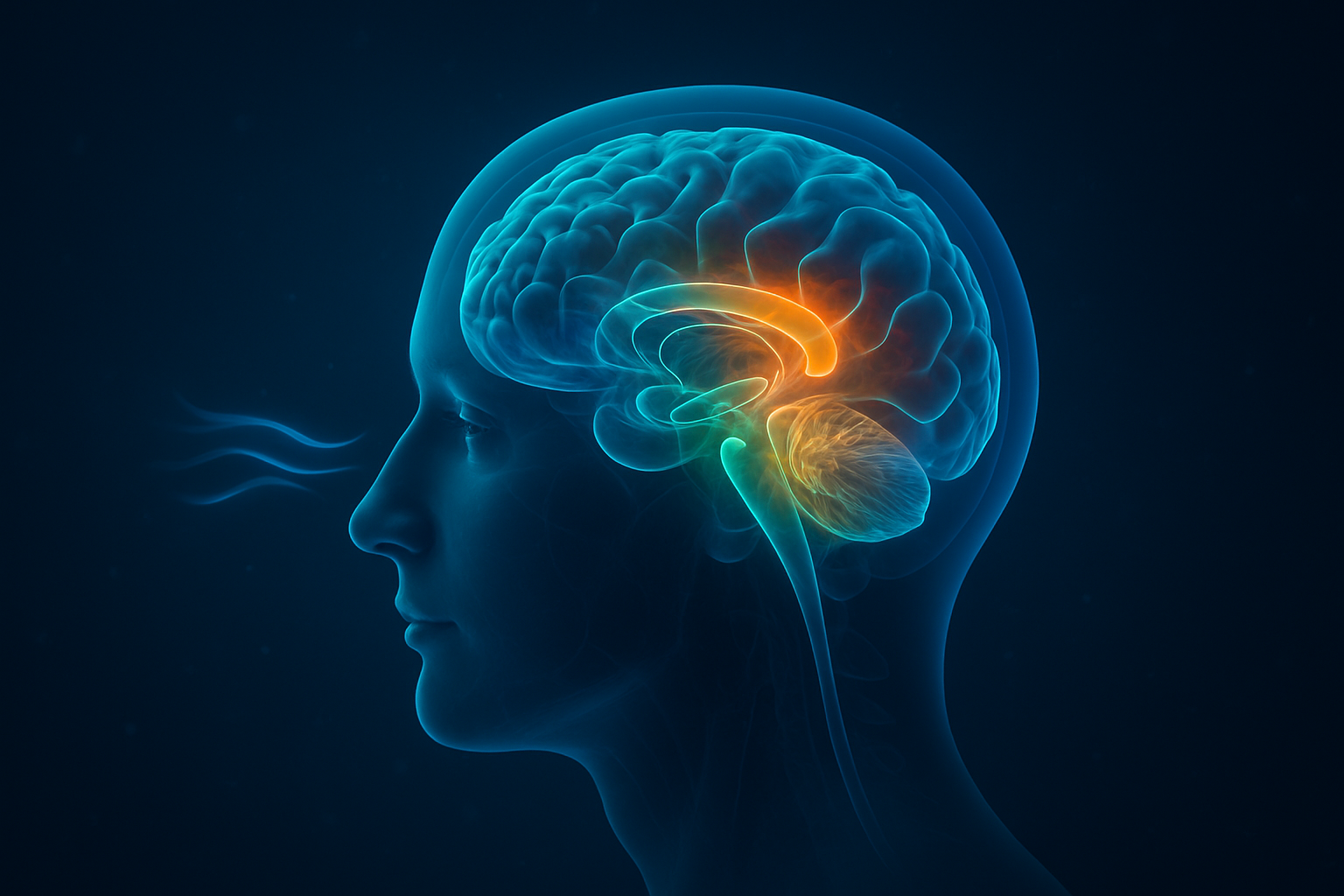
Your sense of smell has direct connections to the memory & learning parts of the brain.
Neuroplasticity is the brain's remarkable ability to reorganize & form new neural connections.
Studies show loss of smell is an early sign of cognitive decline and increases risk of depression, whereas training your sense of smell can have the opposite effect.
Through active smelling you will strengthen brain areas associated with memory and mood.
What is Olfactory Training (OT)?
A scientifically-endorsed practice involving the daily intentional smelling of scents.
A simple and safe practice accessible to all.
OT strengthens and grows parts of the brain associated with memory and cognition, and helps restore lost sense of smell.
Shown to elevate mood and well-being.
The Science
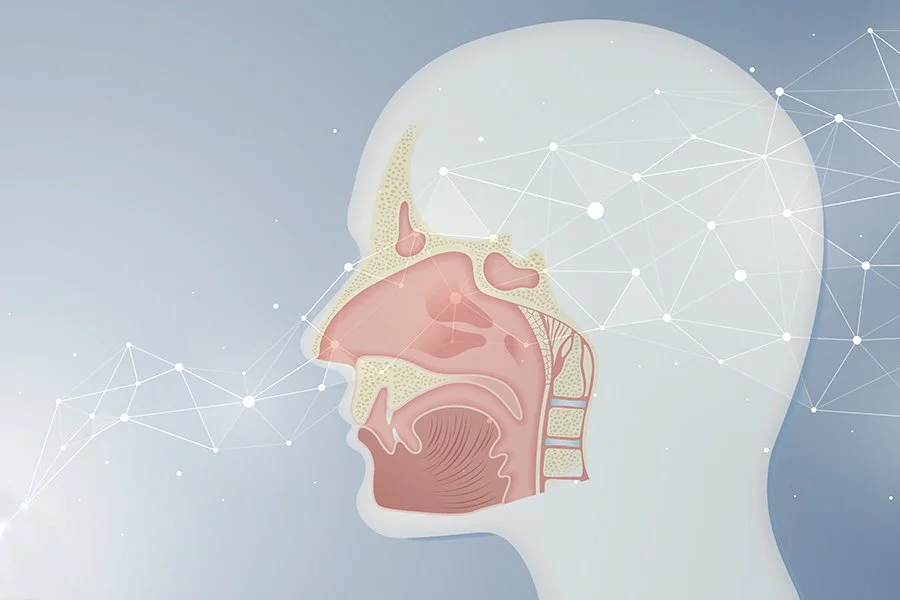
Your sense of smell is a Super Highway going directly to the memory parts of your brain.
Science has discovered that Olfactory Training:
Increases grey matter volume (literally grows your brain!) in critical regions (Al Ain et al, 2019; Rezaeyan et al, 2022)
Decreases depression, specifically in aging populations (Birte-Antina et al, 2018; Sabaniewicz et al, 2022)
Enhances mood in general (Chen & Chen, 2015; Doty, 2019)
Helps people with dementia remember words faster (Cha et al, 2021)
Positively impacts cognitive function (Johnson, 2011)
Improves cognition, brain connectivity, and brain health (Leon & Woo, 2018)
The Studies
After just 12 weeks of the 4-scent protocol, participants showed measurable increases in grey matter volume in the hippocampus, thalamus, and cerebellum.
Reference: Gellrich, J., et al. (2018). Brain volume changes in hyposmic patients before and after olfactory training. Laryngoscope, 128(7), 1531-1536.
In a head-to-head 5-month comparison, the 4-scent protocol significantly improved short-term memory, verbal fluency, well-being, and depression symptoms in healthy older adults, while daily Sudoku puzzles produced no cognitive improvements whatsoever.
Reference: Birte-Antina, W., et al. (2018). Olfactory training with older people. International Journal of Geriatric Psychiatry, 33(1), 212-220.
The first prevention study found that healthy older adults practicing olfactory training showed improved MoCA cognitive scores while the control group experienced expected age-related decline, with OT groups protected from worsening dementia screening scores.
Reference: Oleszkiewicz, A., et al. (2021). Olfactory training with Aromastics. Behavioral Neuroscience, 135(3), 330-344. PMID: 34110862
Olfactory training with the 4-scent protocol for just 16 weeks produced an 11-13% bilateral increase in olfactory bulb volume, with growth occurring in both the trained and untrained nostrils, demonstrating that top-down cognitive processes drive structural brain changes.
Reference: Negoias, S., et al. (2017). Long-term effects of olfactory training in patients with post-infectious olfactory loss. Rhinology, 55(4), 311-316.
After 6-9 months (average 7 months) of the 4-scent protocol, participants showed bilateral grey matter volume increases across cerebellum, thalamus, and multiple cognitive control regions including the medial orbitofrontal cortex.
Reference: Han, P., et al. (2021). Olfactory brain gray matter volume changes in patients with idiopathic olfactory loss. Chemical Senses, 46, bjab025.
In dementia patients, 12 weeks of olfactory training significantly improved cognitive function and reduced brain damage markers(plasma Tau), with 89% of participants maintaining or improving their cognition compared to just 56% who did nothing.
Reference: Lin, L. J., & Li, K. Y. (2022). Olfactory-Based Sensory Stimulation and Alzheimer Disease-Related Biomarkers in Dementia. Frontiers in Psychology, 13, 1003325.c

What Can I Do to Improve my Memory?
Start doing Olfactory Training today, and bring better brain health into your life. It's easy!
Practice OT twice a day, every day, ideally making it a new lifestyle habit.
Use 4 single-molecule scents at a high concentration.
With each scent, engage fully in the act of smelling for at least 10 seconds.
Practice every day, and do one of the best things you can for your brain health!
Who’s it for?
-

Anyone who wants to improve their memory and mental clarity.
-

Anyone who has lost their sense of smell.
-

Anyone taking proactive steps for their brain health.
Anyone who has had COVID-19 should strongly consider Olfactory Training. Here’s why.